Kidney disease affects 850 million people globally, and mortality from kidney diseases is rising.1 In nephrology, like many other specialities, there are gaps between evidence and practice in the care of patients. 2 Implementation science can help bridge these gaps. Dr. Michelle Wong, a nephrologist and clinical researcher with BC Renal, has used implementation science techniques and tools to increase the impact of her research projects on patient care.
To deepen her knowledge of implementation science, Dr. Wong participated in the International Society of Nephrology Emerging Leaders Program where she received her initial training in implementation science. She followed that with a two-year program offered through the Implementation Science Training Initiative (ISTI). These two programs allowed her to hone her skills and refine the implementation science component of two of her research projects.
Improving follow up care after hospitalization in people with acute kidney injury
“When I started ISTI, I focused on developing a project to improve follow-up care after acute kidney injury (AKI), a condition that leads to an abrupt decline in kidney function,” said Dr. Wong, “The idea originated with my Emerging Leaders Program cohort.”
She and her co-lead Dr. Peter Birks held focus groups with nephrologists, GP’s, and patient/caregiver partners to understand barriers to follow up care after hospitalization in patients with AKI in British Columbia. They co-developed multifaceted strategies to address these challenges, including an AKI-specific discharge template, and educational resources for primary care providers and patients. 3
A feasibility study is currently underway at multiple hospitals in BC to evaluate the implementation and effectiveness of these strategies, with the goal of informing implementation in other health-care centres.
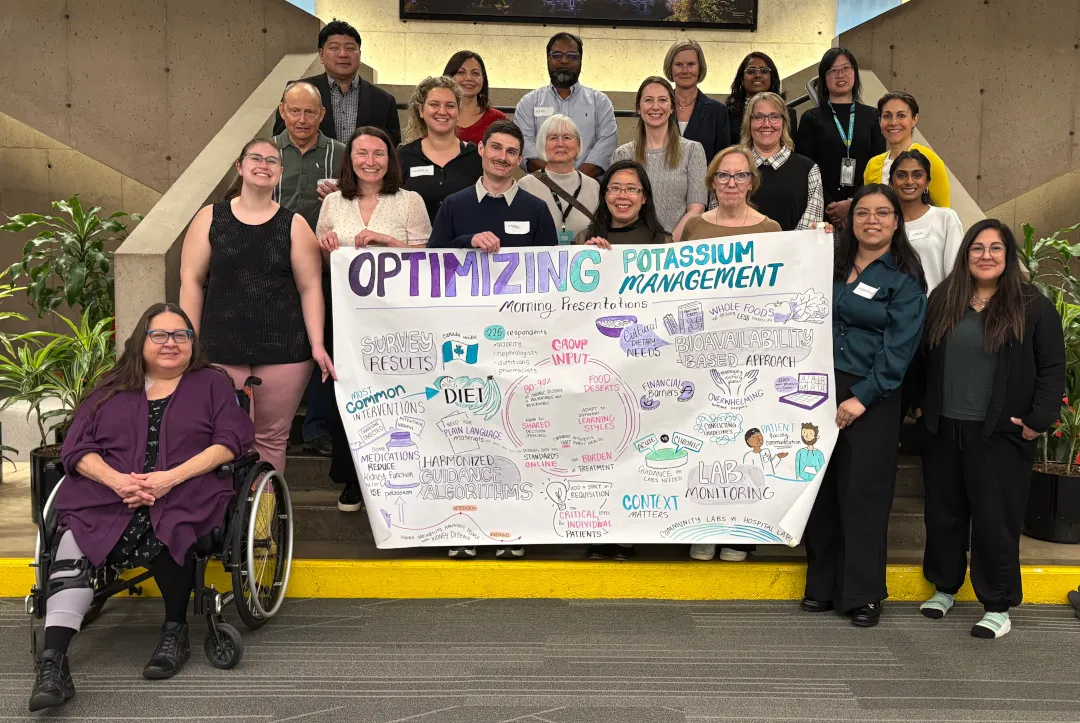
Optimizing potassium management in people with cardio-kidney-metabolic diseases
People with diabetes, chronic kidney disease, and/or cardiovascular disease are at greater risk of high potassium levels (hyperkalemia) which can lead to severe health outcomes such as arrhythmias and death.
Dr. Wong, working with co-leads Dani Renouf and Dr. Kelly Picard, set up a project to evaluate and improve potassium management practices.
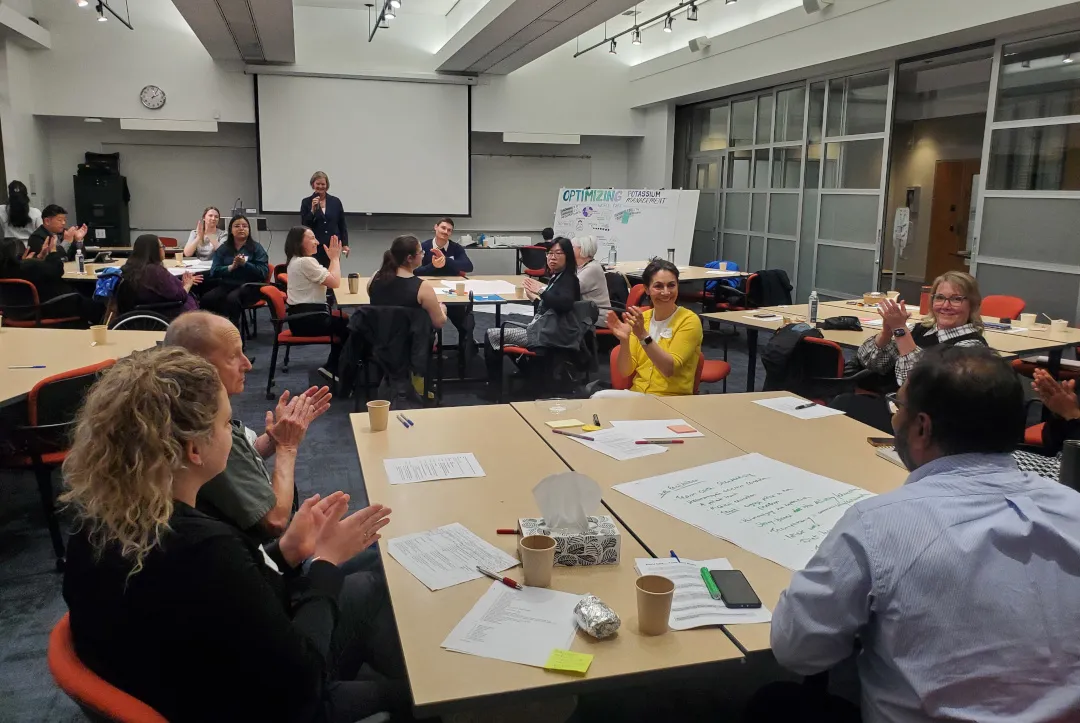
They assembled health-care providers from nephrology, cardiology, endocrinology, primary care, and patient partners from across BC. Three working groups focused on different aspects of potassium management met virtually to answer key questions and identify evidence-based practices that could improve outpatient management of hyperkalemia.
In April 2026, they held an in-person co-design meeting to bring together all working group members. Small group discussions helped clarify outcomes, as well as barriers and facilitators to implementing evidence-based practices, and possible strategies to address these factors. The process demonstrated meaningful engagement with diverse interest holders, in such a way that allowed all perspectives to be heard.
“With additional support from the CAN-TAP-TALENT Early Career Researcher award, we will be able to use the output of the co-design process to develop a real-world implementation trial,” said Dr. Wong.
Looking ahead
Dr. Wong is continuing to grow her implementation science work, joining the Knowledge Mobilization Committee for the CanSOLVE-CKD Network to provide expertise around knowledge mobilization and implementation processes to facilitate the scaling and spreading of evidence generated from patient-oriented kidney research projects in Canada.
“Implementation science has expanded my research horizons, grown my research networks, and reinforced the importance of patient-oriented research. It has made my work more meaningful and impactful, and I am excited to continue my implementation science journey,” said Dr. Wong.
Note: This article adapted from a blog post written by Dr. Michelle Wong for the SFU Knowledge Mobilization website. Dr. Wong is a kidney researcher affiliated with the BC Kidney Research Collaboratory.
1 Jager KJ, Kovesdy C, Langham R, Rosenberg M, Jha V, Zoccali C. A single number for advocacy and communication-worldwide more than 850 million individuals have kidney diseases. Kidney Int. 2019 Nov;96(5):1048-1050. doi: 10.1016/j.kint.2019.07.012. Epub 2019 Sep 30. PMID: 31582227.
2 Luyckx V, Tuttle K, Abdellatif D, et al. Mind the gap in kidney care: translating what we know into what we do. Kidney International 2024; 105, 406-417.
3 Wong MMY, Birks P, Enilama O, Yu JSW, Singh A, Levin A. A Multipronged Intervention to Improve Outpatient Care Following Hospitalization With Acute Kidney Injury: An Implementation Study Protocol. Can J Kidney Health Dis. 2026 Apr 16;13:20543581261429009. doi: 10.1177/20543581261429009. PMID: 42011183; PMCID: PMC13091966.